
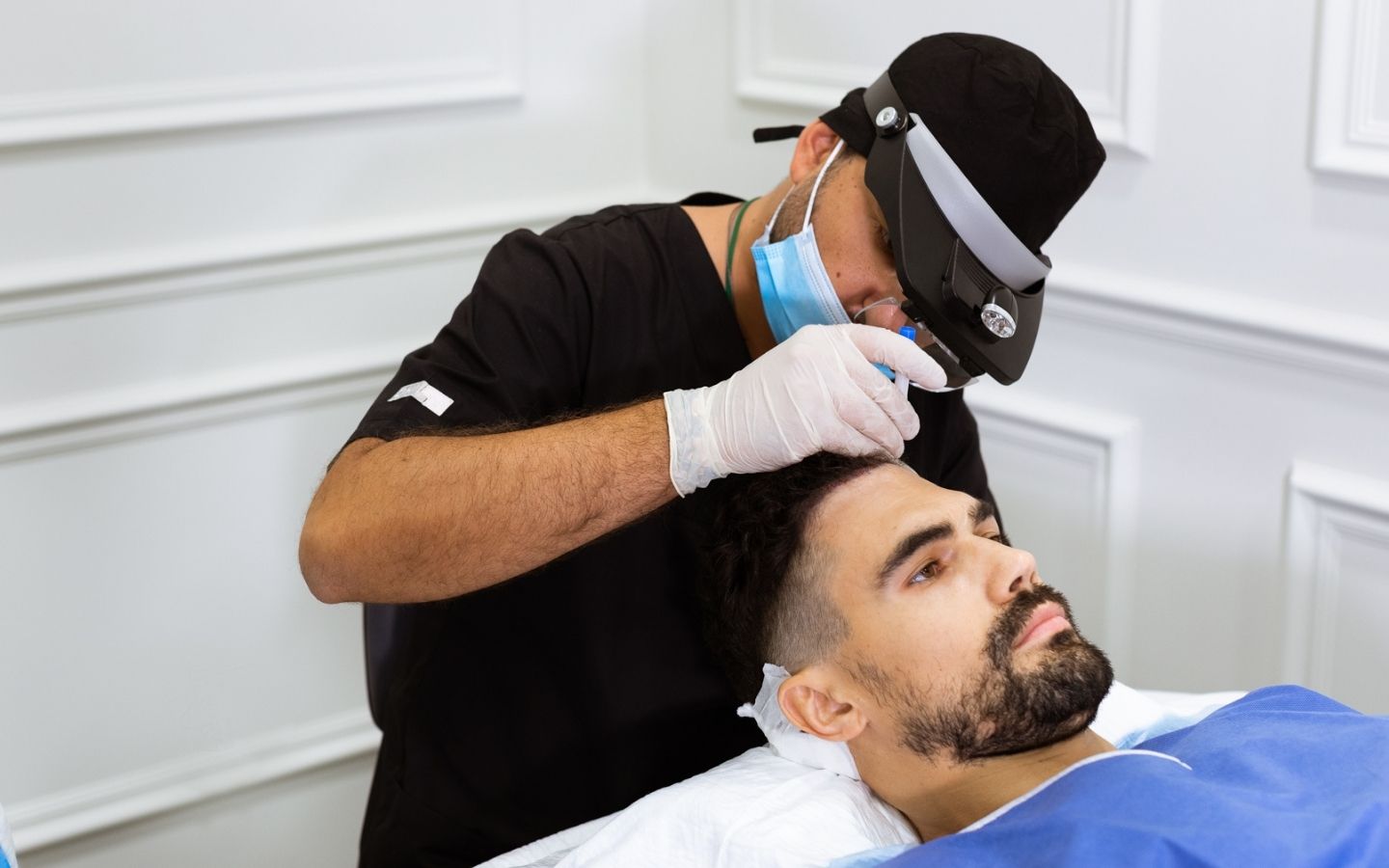
A hair transplant, also referred to as hair restoration, is a medical procedure designed to treat hair loss. The principle is straightforward: the physician extracts hair follicles from the donor area, typically located at the back of the head, and implants them into thinning or balding areas of the scalp.
Maison Lutétia's Exclusive Offering
Hair transplant
A Comprehensive Solution for Hair Restoration
What is a hair transplant?
On this page
Our DHI® method: gentle extraction and precise implantation
The DHI® method, or Direct Hair Implantation, offered exclusively at Maison Lutétia, is widely regarded as the most advanced hair transplant technique available today. This approach involves a gentle and controlled extraction process, ensuring that no overharvesting occurs. The same level of heightened precision is applied during the implantation phase, which is carried out with both technical mastery and intelligence.
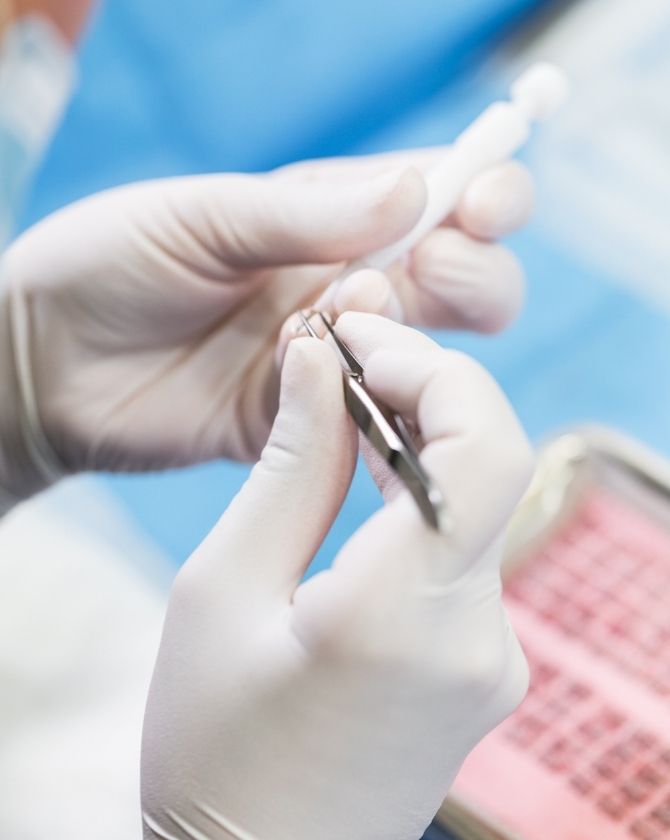
The DHI® method uses a specially designed implantation pen to place follicles into thinning areas of the scalp with finesse and dexterity. This approach eliminates the need for pre-made recipient incisions, allowing for significantly greater precision and the ability to create natural hyperdensity. Yet, the DHI® method extends far beyond this innovation alone.
The DHI® method: far superior to FUE and FUT
An unprecedented level of medical training
All physicians at Maison Lutétia undergo an extensive 18-month training programme, combining both theoretical and practical expertise, dedicated exclusively to the DHI® method. During a DHI® hair transplant, no assistance from unqualified personnel is permitted. The physicians, having acquired a unique level of expertise, perform the procedure entirely themselves - from the first extracted follicle to the final implanted hair.
Exceptional delicacy
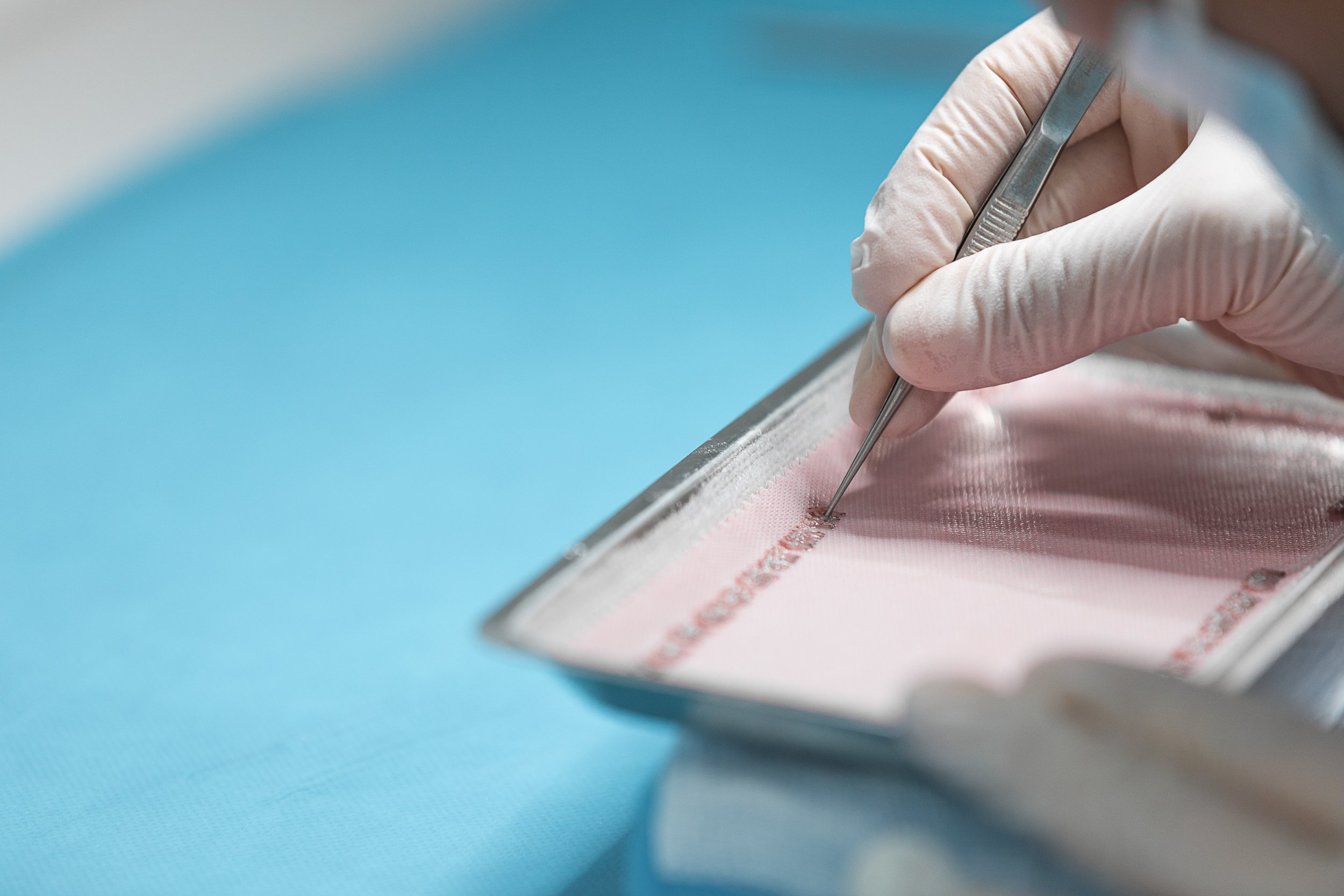
Within a DHI® hair transplant, the stage of follicular unit extraction is defined by an unmatched level of delicacy. Highly precise instruments have been specifically designed and developed to minimise any risk of transection. Between extraction and implantation, grafts are preserved in a HypoThermosol solution — a product traditionally reserved for organ transplantation procedures — capable of maintaining cellular viability outside the human body. As this solution is costly, many other clinics rely instead on a simple saline solution during this stage.
The physician also ensures the preservation of the donor area, avoiding any form of overharvesting. This is crucial, as androgenetic alopecia is a progressive condition that may require multiple procedures over time. Protecting the donor area’s capital is therefore at the very core of our approach.
The most advanced implantation technique
The follicle implantation technique used in the DHI® method is widely admired, yet remains inimitable. First and foremost, no recipient incisions are created, thereby eliminating any visible trace of the procedure. Physicians follow an intelligent implantation plan, combining scientific expertise with artistic precision to achieve a natural and imperceptible result. With the DHI® method, each transplant is entirely bespoke, designed to complement the unique harmony of your features.
Complete absence of scarring
DHI® hair transplantation at Maison Lutétia stands apart for its exceptionally natural results — and above all, the complete absence of scarring. Unlike other techniques available on the market, the DHI® method leaves no marks, thanks to its non-invasive nature and the subtlety of both extraction and implantation techniques.
The implantation pen, with a diameter of just 0.8 mm, allows the physician to place each follicle with extreme precision. This significantly reduces trauma to the surrounding tissue and promotes considerably faster healing compared to other methods. The only lasting result of the procedure is a dense, renewed head of hair.
The excellence of hair artistry
Beyond scientific expertise — which must be exemplary — the success of a DHI® hair transplant relies on a highly refined artistic sensibility. Highly specialised physicians apply an artistic eye to design the ideal hairline for each patient, taking into account facial structure and individual aspirations.
Thanks to the implantation pen, the physician is able to control the angle, depth, direction, and density of each implanted hair. The objective is to replicate, with absolute accuracy, the patient’s natural hair growth pattern. A DHI® transplant is, in this sense, a true feat of artistry.
A rigorous, entirely pain-free protocol
The DHI® protocol is, to date, the only hair transplant protocol that is rigorously codified, patented, and standardised, offering a guarantee of both safety and excellence. Highly specialised physicians adhere to nearly one hundred precise steps defined by the Total Care System protocol, enabling expert correction at every stage of alopecia.
Unlike other hair transplant techniques, the DHI® method at Maison Lutétia is governed by a strict and fully standardised process.
Comprehensive, bespoke post-operative care
Maison Lutétia further distinguishes itself through its comprehensive post-operative care. In the days following the procedure, patients have the opportunity to undergo their first hair washes under the expert supervision of the medical team. Between Day 10 and Day 20, a harmonising haircut is offered at the Lutétia Barber.
Quarterly follow-up appointments are scheduled for up to 12 months after the procedure to monitor the progress of the results. The medical team also provides ongoing support to address any patient questions or concerns.
In contrast to low-cost procedures performed abroad — where patients are often left without structured follow-up — Maison Lutétia guarantees attentive, continuous care, reinforcing both patient confidence and safety throughout the entire hair restoration journey. This comprehensive follow-up is essential to sustaining the long-term success of the transplant.
What are the stages of a hair transplant?
Step 1: Consultation
The first essential step in the DHI hair transplant process is the initial consultation. This key moment allows Maison Lutetia’s expert physicians to assess each patient’s specific needs, examine the donor area, discuss expectations, and explain the DHI method. The preliminary consultation enables the customization of recommendations based on the patient’s individual characteristics, ensuring optimal results. Maison Lutetia distinguishes itself through its commitment to high-end service from the very beginning, emphasizing transparent communication and a thorough understanding of patient expectations.
Step 2: Graft Extraction
A custom hairline is designed by our facial aesthetic expert to enhance the patient's features. Prior to starting the procedure, shaving (line shaving, marine cut, or complete shave) is performed to facilitate access to the grafts. The extraction of the grafts follows, a crucial step to ensure the quality of the implanted follicles. A beveled punch is used to core the follicle while avoiding any risk of transection. The time the grafts spend outside the body is minimized to ensure their quality. No overharvesting is performed, allowing for a potential future hair transplant if hair loss progresses. The expertise of Maison Lutetia’s doctors is highlighted in this step, where precision and gentleness in extraction contribute to the viability of the follicles and the overall success of the procedure.
Step 3: Follicle Implantation
The next, equally crucial step is the implantation of the follicles into the recipient area of the scalp. At Maison Lutetia, this step is carried out with extreme precision using the DHI pen, showcasing the artistic craftsmanship and scientific skills of our expert physicians. They implant the grafts one by one, following an intelligent distribution plan, with single follicles to create a clean hairline, and multiple follicles to provide density, ensuring an even and natural distribution on the scalp. Our experts can even reconstruct the swirling implantation pattern found at the vertex! This exclusive method eliminates the need for pre-made recipient holes, avoiding the "leek field" effect, preserving the integrity of the follicles, and promoting healthy regrowth. Maison Lutetia’s expertise in this implantation stage is crucial for creating a natural hairline and homogeneous density, resulting in unmatched aesthetic outcomes.
Step 4: Post-Procedure Follow-Up
Finally, the last step in the DHI hair transplant process is the post-procedure follow-up. Maison Lutetia places particular importance on patient follow-up after the transplant, providing personalized advice, post-operative care instructions, and regular monitoring (every 3 months for 1 year) to track hair transformation: tissue evolution, hair growth, and patient satisfaction. This post-procedure follow-up at Maison Lutetia is a key element that ensures comprehensive support throughout the patient’s hair journey, which is often not possible with hair transplants performed abroad in hair tourism. Patient satisfaction is at the heart of our concerns, supported by the constant availability of our medical team.
Guaranteed results: a regrowth rate close to 100%
At Maison Lutétia, the DHI® method is favoured for its superior aesthetic outcomes. Advanced medical training combined with refined artistic sensibility enables expert physicians to design a bespoke hairline using an intelligent distribution plan. This approach minimises any risk of trauma during graft handling and promotes a regrowth rate close to 100%.
Graft viability is further enhanced by the reduced time follicles remain outside the scalp, as they are preserved in HypoThermosol, a solution typically reserved for organ transplantation.
At Maison Lutétia, the DHI® method represents the embodiment of excellence in hair transplantation, offering patients a cutting-edge, personalised solution to restore a natural, full head of hair.
Maison Lutétia innovations: ExoZD®
In addition to delivering one of the most advanced hair transplant protocols available, Maison Lutétia continuously enhances the DHI® method through proprietary innovations.
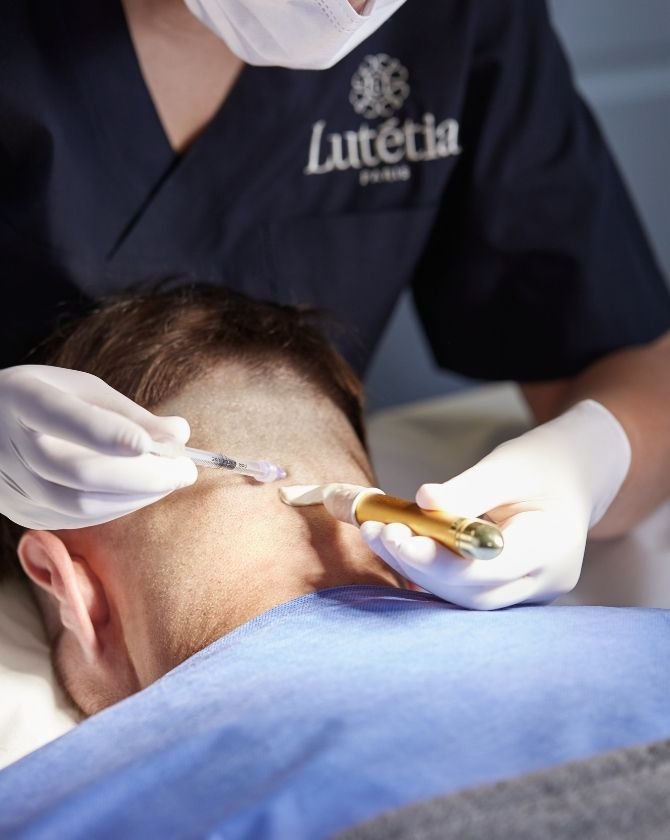
Patients may opt for ExoZD®, which involves the application of a highly concentrated exosome solution to the donor area following follicle extraction. Exosomes are revolutionising aesthetic medicine due to their regenerative, anti-ageing properties and their ability to stimulate hair growth.
Maison Lutétia has developed a specific technique involving the application of exosomes to the donor area in order to promote and accelerate skin tissue regeneration. As a result, healing is significantly faster and trauma to the donor area is considerably reduced.
An added benefit: exosomes penetrate deeply into the skin layers, simultaneously stimulating hair growth.
What is the cost of a hair transplant?
One of the most critical aspects of a hair transplant lies in the medical environment in which the procedure is performed.
At Maison Lutétia, the quality of care is the sole priority. This includes the use of two sets of high-precision, single-use instruments, HypoThermosol bio-preservation solution (typically reserved for organ transplantation), and a semi-sterile operating theatre.
These rigorous standards ensure both the safety and effectiveness of every procedure.
Maison Lutétia also offers the possibility of staged payments. Pricing varies according to the patient’s needs and the scale of the transplant, ranging from €3,900 for a half-day procedure to €17,900 for a two-day session.
A personalised quotation is provided free of charge by our expert Medical Advisors, who support each patient throughout their hair restoration journey and provide detailed answers to all questions.
Our Before and After: Testimonials and Results from Maison Lutetia
Our Answers to Your Questions
How many grafts are required?
The number of grafts required for a hair transplant is determined by factors such as the extent of baldness, the desired hair density, and the individual characteristics of the patient. The areas affected by baldness, whether localized or extensive, directly influence the amount of grafts needed to restore a natural-looking head of hair. Additionally, the level of density desired by the patient guides the expert physician in planning the distribution of the grafts. A thorough assessment during the preliminary consultation allows hair restoration experts to provide a personalized recommendation, ensuring aesthetically pleasing results tailored to each individual's needs.
What is a hair graft?
A graft refers to a follicular unit transplanted from a donor area to a recipient area of the scalp. A hair graft can contain one or more hair follicles, along with their sebaceous glands, blood vessels, and surrounding tissues. These grafts are carefully implanted in areas where hair is thinning or absent, contributing to the restoration of hair density and the treatment of baldness. Precise selection and implantation of grafts are crucial aspects of the hair transplant process, aiming to achieve natural and aesthetically satisfactory results.
Why choose a hair transplant in France?
Opting for a hair transplant in France offers several advantages. France adheres to strict medical standards and rigorous regulations, ensuring the safety and quality of hair transplant procedures. French clinics are required to comply with these high standards, providing patients with optimal sanitary conditions. Additionally, France is home to renowned doctors with expertise in hair restoration. Choosing a transplant in France also facilitates communication between patients and their medical team, enhancing mutual understanding and easing post-operative follow-up. Combining high standards, qualified professionals, and advanced medical technology, hair transplantation in France provides a comprehensive and reliable solution for those seeking quality results.
What is the cost of a hair transplant?
The cost of a hair transplant depends on the extent of your baldness, the capacity of your donor area, and the expected results. At Maison Lutetia, the price of a hair transplant ranges from €3,900 for a half-day procedure to €17,900 for a two-day procedure.
At what age can one undergo a hair transplant?
The possibility of undergoing a hair transplant depends on several factors, and there is no strictly defined age for this procedure. Generally, hair transplants are recommended for adults when hair loss is stable and the progression of baldness is predictable. However, younger individuals may also be candidates if their baldness is advanced. It is essential to consult a hair restoration expert for a personalized assessment, considering the stability of hair loss, patient expectations, and other medical factors. A comprehensive consultation will determine if a hair transplant is the best option and when it should be considered.
What is the average timeframe for scheduling a hair transplant?
The average timeframe for scheduling a hair transplant varies depending on factors such as appointment availability and the duration of the procedure. Generally, the average wait time for an appointment can be 4 to 6 weeks. However, it is important to note that wait times may vary due to high demand or possible cancellations.
How long does it take for hair to grow back?
“Baby hair,” or new hair, begins to grow three months after the procedure. Hair growth continues until final results are achieved about one year post-transplant.
What is the lifespan of a transplanted hair?
A transplanted hair does not fall out. However, native hairs continue to shed in cases of androgenetic alopecia. Therefore, a second hair transplant may be considered a few years after the initial procedure.
In which cases is a hair transplant impossible?v
A hair transplant may be difficult or impossible in certain cases, such as the lack of a sufficient donor area, advanced baldness, underlying medical conditions that could complicate the procedure, unrealistic patient expectations, or premature youth with unstable hair loss. The availability of a stable donor area is crucial in determining the feasibility of the procedure. A thorough evaluation by an expert physician is essential to assess the suitability of a hair transplant in each individual case.
Why undergo a hair transplant?
A hair transplant not only provides an aesthetic solution to baldness but can also significantly impact self-confidence and quality of life. It is important to consult an expert for a diagnosis, evaluate available options, determine the feasibility of a hair transplant, and discuss expected outcomes. Hair transplantation represents a significant advancement in hair restoration, offering a durable and natural solution to combat baldness. For a procedure in Paris, consult Maison Lutetia.
Your hair is invaluable: seek the expertise of Maison Lutétia
Choosing Maison Lutétia in Paris for your hair transplant means not only selecting the most advanced technique available on the market, but above all, benefiting from an unmatched standard of care in France within the field of hair restoration. Maison Lutétia has established itself as a leading authority in its domain, offering exceptional expertise in hair transplantation.
The expert physicians at Maison Lutétia Paris are internationally recognised for their experience, scientific expertise, and refined artistic sensibility. Maison Lutétia is driven by a commitment to addressing the specific needs of each patient, fostering a relationship built on trust and expertise throughout the entire hair restoration journey.
Find us
6 Rue Ampère, 75017 ParisAdresses
Esthétique
6 Rue Ampère
75017 Paris
Greffe capillaire
9 Rue Ampère
75017 Paris
A proximité
Hôtel Pavillon Monceau
43 Rue Jouffroy d’Abbans
75017 Paris
Parking
Parking Jouffroy
40 Rue Jouffroy d’Abbans
75017 Paris
Transportation
3
Wagram
2
Monceau
Bus
163
20
31
WeChat

Adresses
Esthétique
6 Rue Ampère
75017 Paris
Greffe capillaire
9 Rue Ampère
75017 Paris
A proximité
Hôtel Pavillon Monceau
43 Rue Jouffroy d’Abbans
75017 Paris
Parking
Parking Jouffroy
40 Rue Jouffroy d’Abbans
75017 Paris
Transportation
3
Wagram
2
Monceau
Bus
163
20
31
WeChat
Follow us on instagram


Suivez-nous sur instagram
@MAISON_LUTETIA